
UX & Interaction designer | UI designer | Team project
How might we help kids play with sounds to enhance a literacy-related experience that respects a library soundscape?
How might we keep the library a supportive soundscape for learning?
For the Introduction to Multidisciplinary Interaction Design course we were asked to work on a group project that would take into account the soundscape of a shared space. We decided to focus on Kanini, the children’s section of Malmö City Library.
Welcoming children from 0 to 8 years of age, Kanini has a very wide range of activity and users. The library organises a set of different events such as storytelling, playdates and artistic activities. Given the kids’ age, Kanini is often used as an inside playground, favouring a noisy soundscape and too often moving away from the cultural activities that librarians try to organise.
We first started the research phase by observing the space on different days of the week and at different times. We then interviewed eight parents of children in different age ranges and three librarians.
What we found out is that sound is always present in Kanini (conversations, kids playing, crying and yelling) but the noise level depends on the day and time, reaching levels that the librarians define “unbearable” during rainy weekends. A fair amount of noise can, though, be beneficial: A kids library without any sounds, that is completely quiet, would, in fact, be confusing and unnatural. Noise is crucial to places where kids interact and play. Finally, we understood that play and literacy go hand in hand in Kanini, as it is a unique mix of playground and library. At such a young age, playing and moving is fundamental to the kids’ learning process. Librarians try to host engaging storytellings as often as they can but staff shortages and other work responsibilities obstruct these activities.
After collecting insights from librarians and parents we decided to focus on creating a sonic artefact that would allow kids to experience immersive, interactive storytellings without the need for the staff to be present.
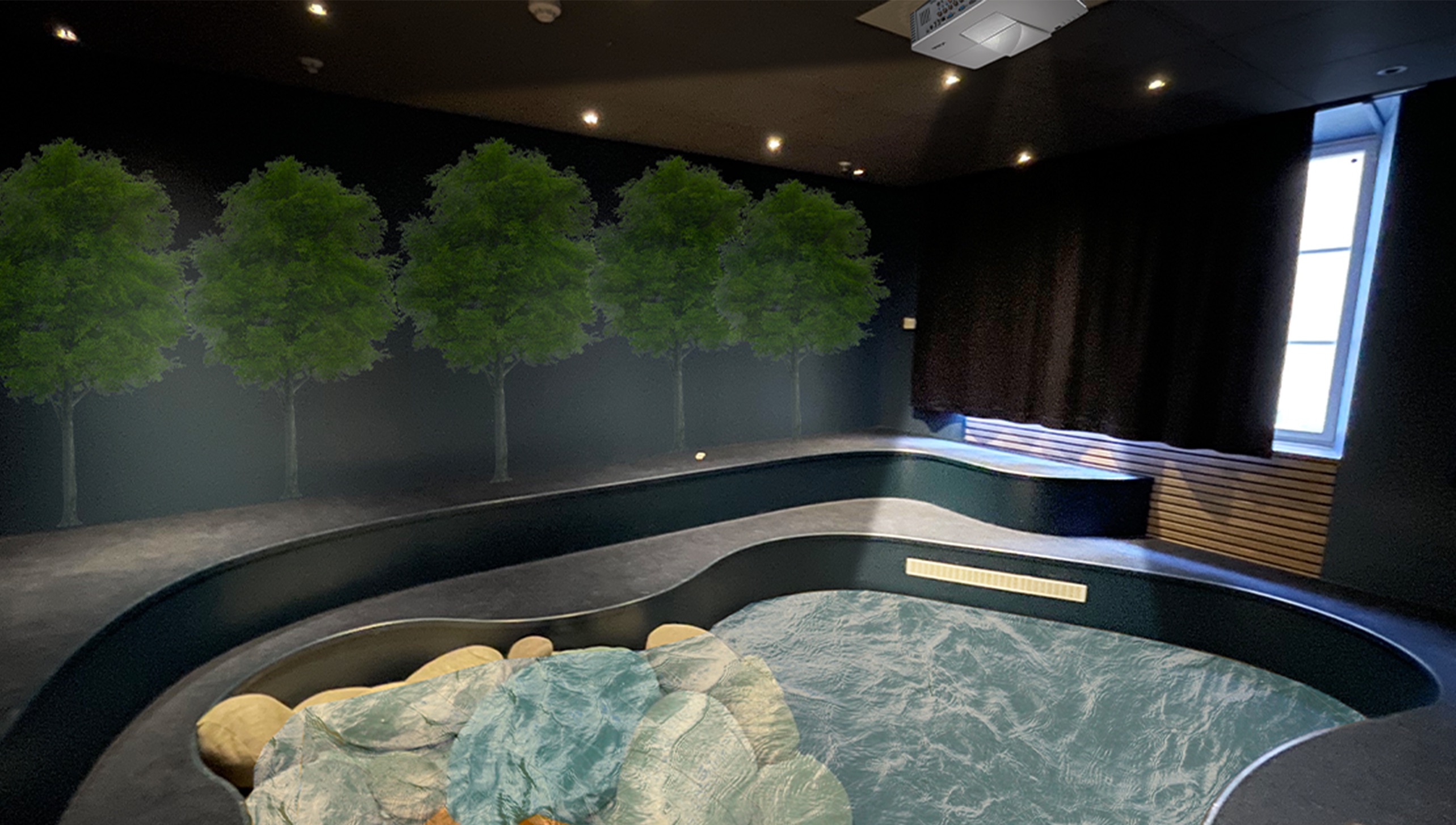
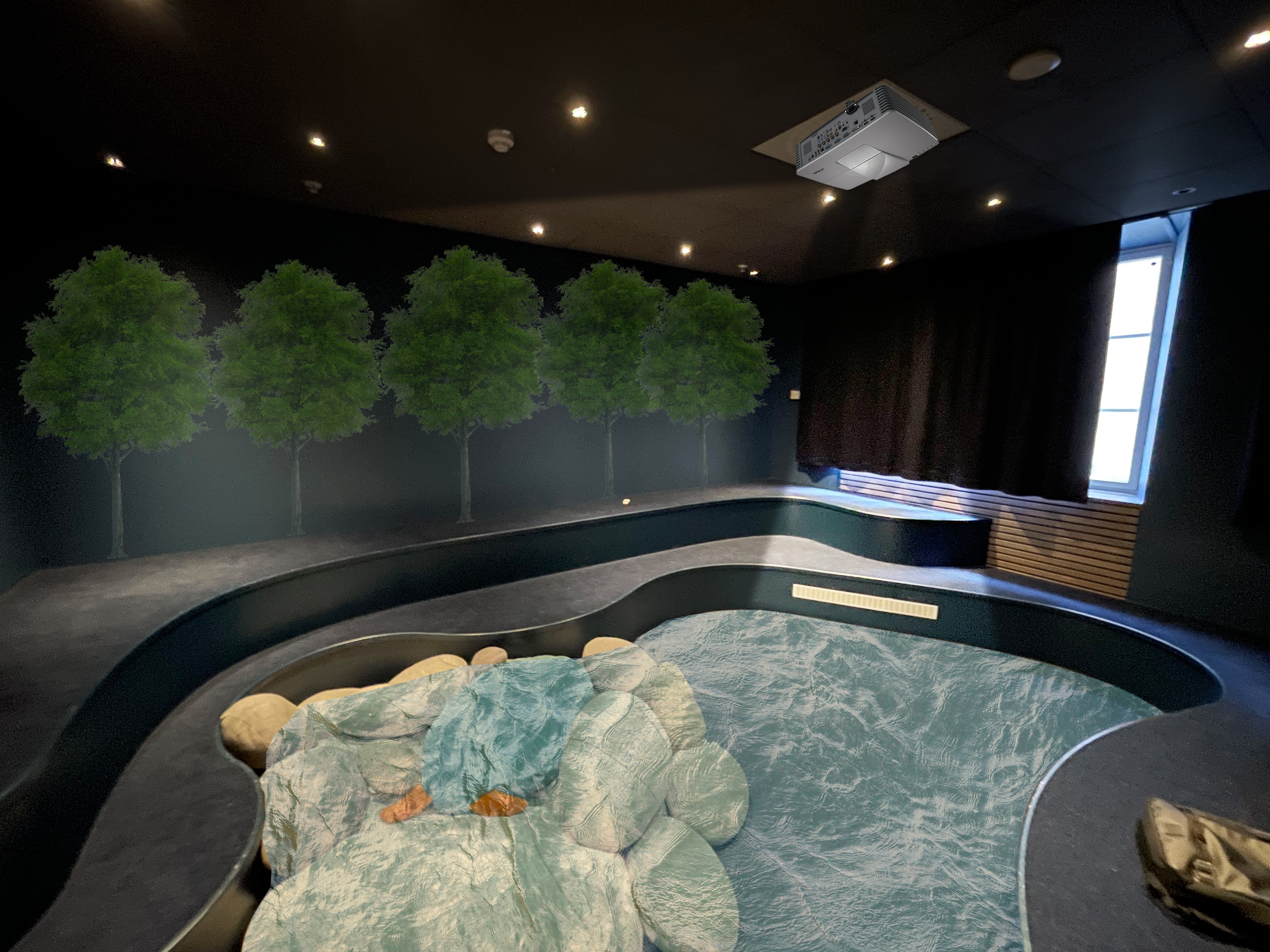
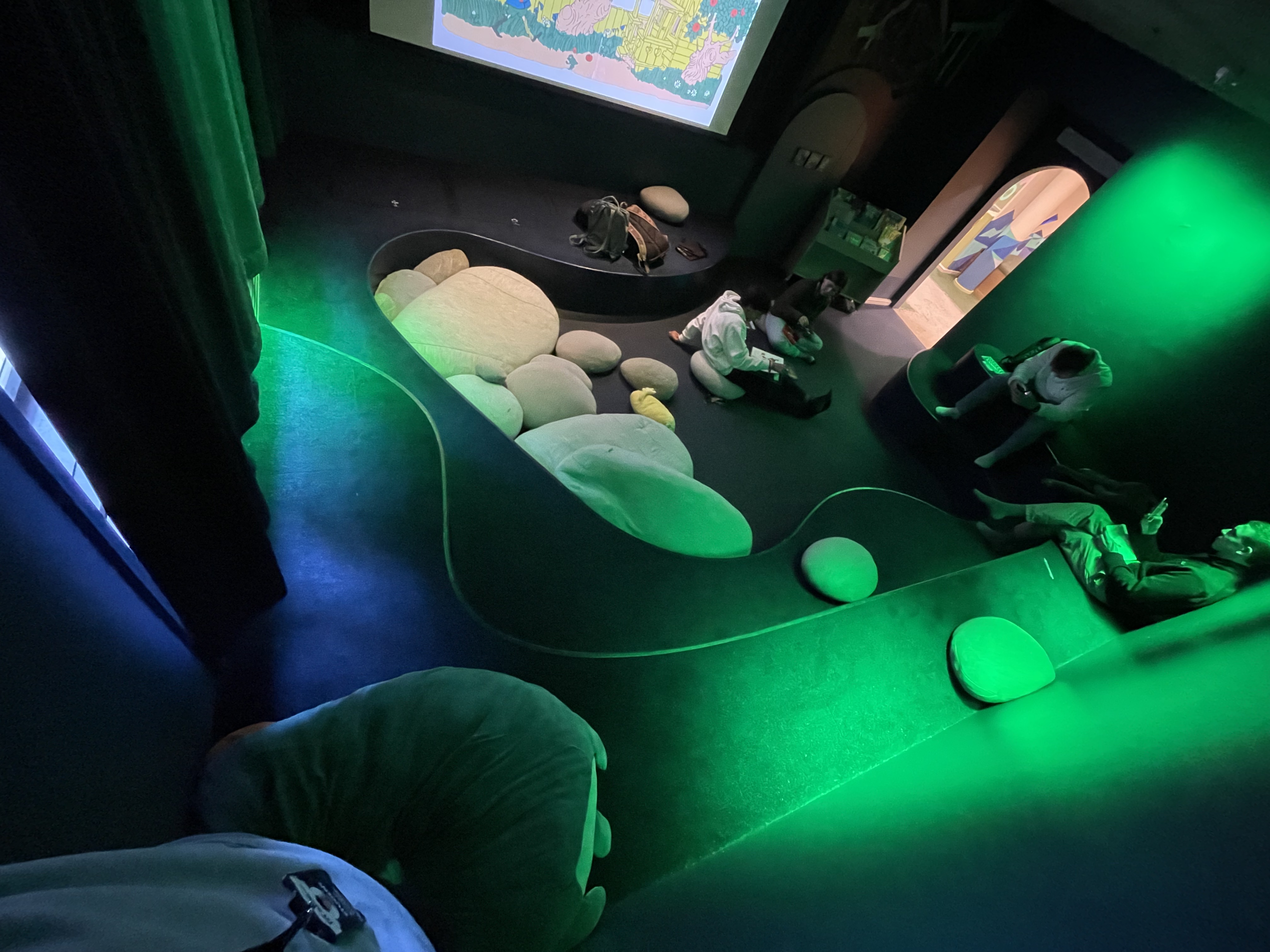
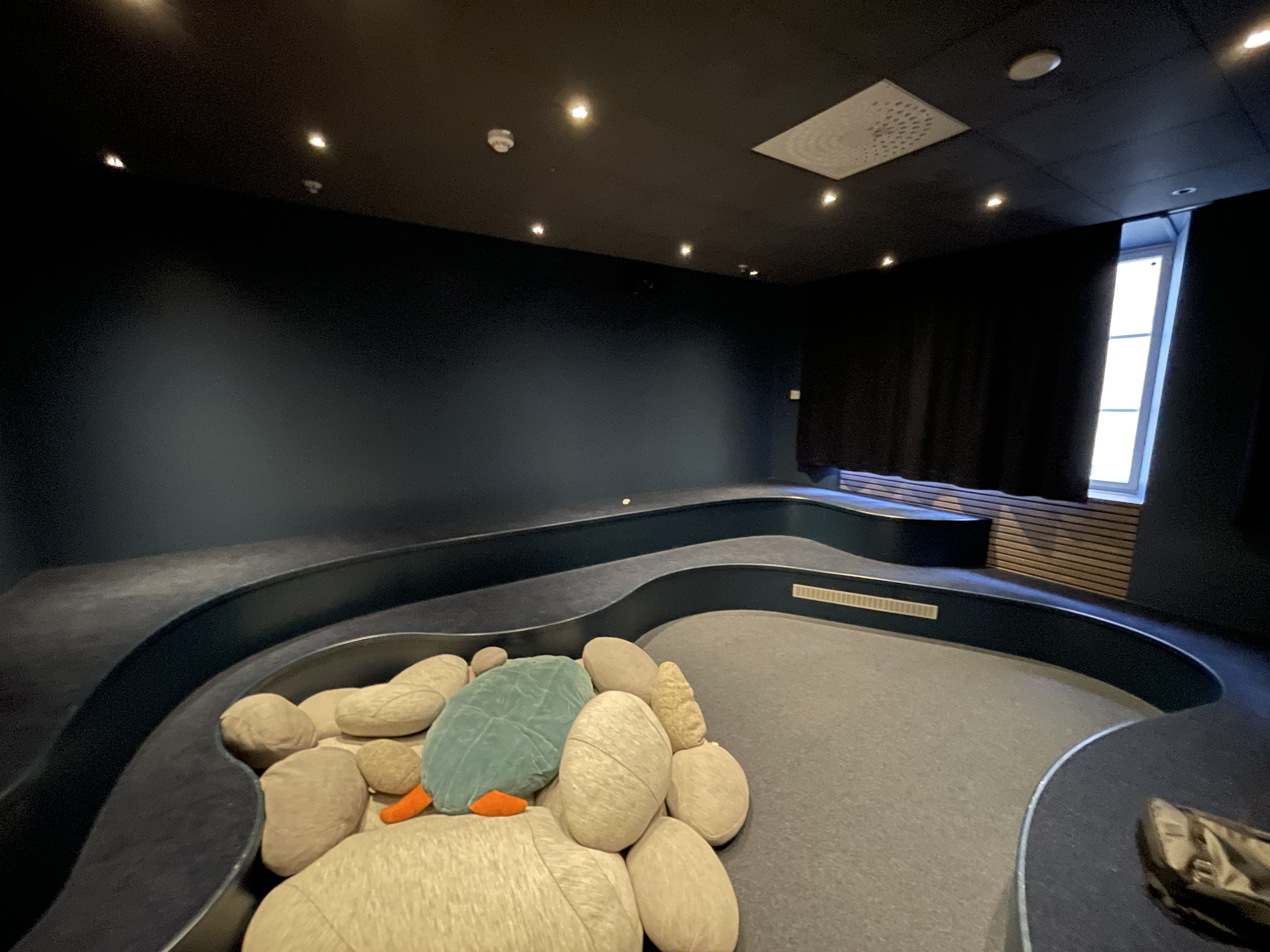
The final design is L.I.S.A (Literacy Interactive Sonic Artefact), a system that gives choices based on sounds in specific regions of the room and responds to children's physical location and movements in order to influence the outcome of a story. We focused on a specific part of the library called The Cave, transforming it into an interactive storytelling room.
L.I.S.A. is an enhanced storytelling experience for kids that are approaching reading. The children will be able to influence the development of the story, elaborated by an AI, through their movements and sounds.
The system uses AI to elaborate the stories, cameras and microphones to know the kids’ movements and sounds and lights, projectors and directional speakers to create an immersive environment.
L.I.S.A helps young kids approach literature in a fun and engaging way. At the same time it allows librarians to focus on other tasks while still offering storytelling events.
The design was tested with four children aged 4-7 years old. One member of the team read an adapted version of “The Little Wooden Robot and The Log Princess”, while the others controlled the light, projections and speakers to simulate the final design. The kids found the experience fun and engaging, they collaborated more than expected to make decisions and could easily understand how their actions were influencing the story.
Hello there! Thank you for visiting my portfolio. I'm thrilled that you've taken the time to explore my work. If you have any questions, comments, or even just want to say hello, feel free to reach out to me using the form below. I'd love to hear from you and learn more about your thoughts on my projects. Whether you're interested in collaborating, have an exciting opportunity, or simply want to connect, I'm here and ready to chat. Looking forward to our conversation and the possibility of working together. Don't hesitate to drop me a line!


